
Pork Information
Pork Is A Lean Choice
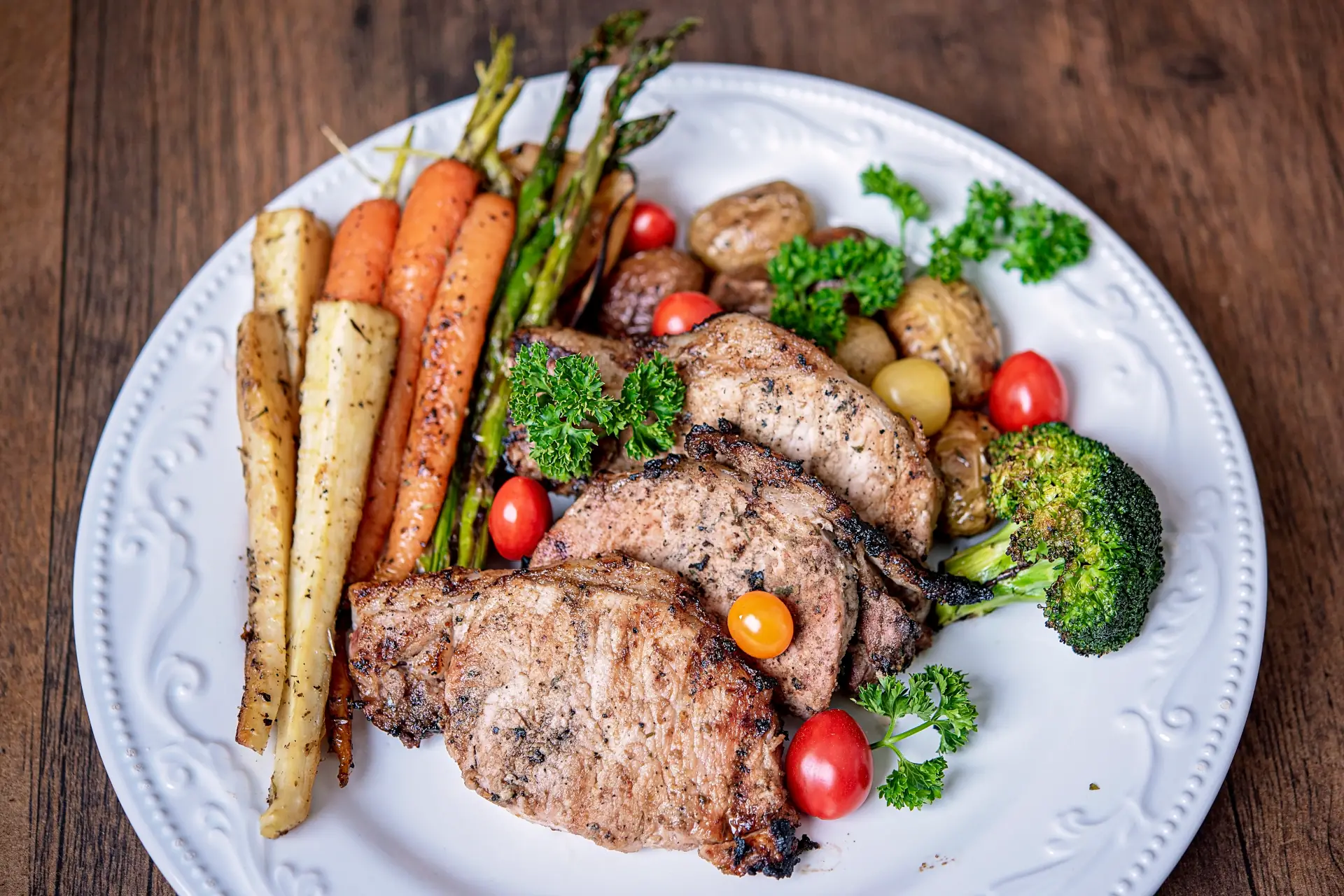
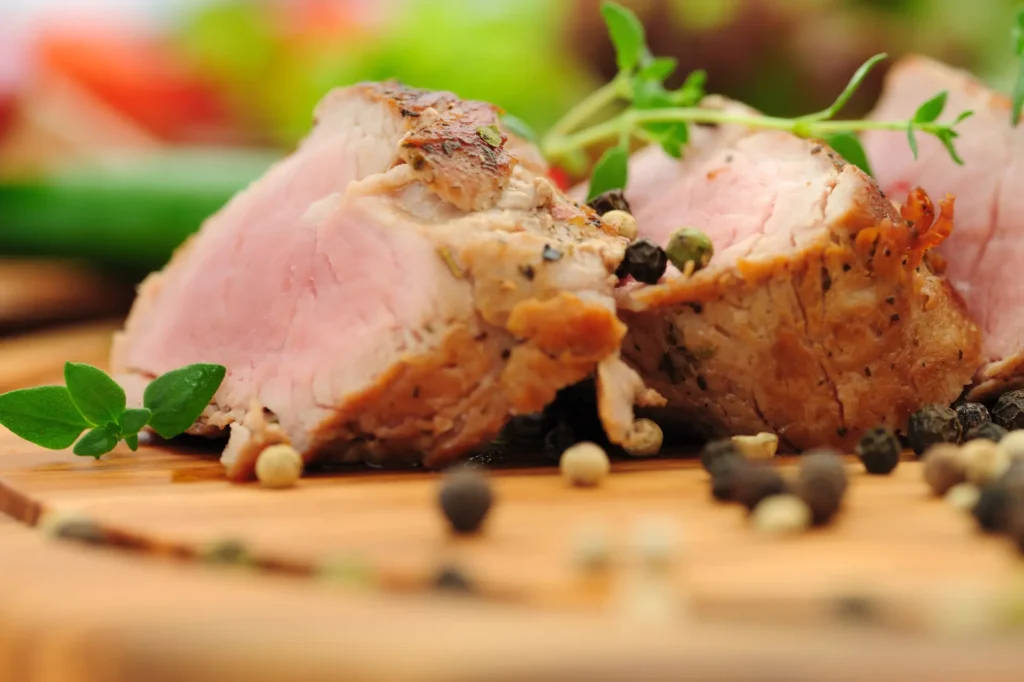
Meeting consumer’s desire for lean meat has been achieved by the pork industry through improved feeding and breeding practices. Today all fresh trimmed pork cuts, except ribs, are extra-lean, with ten common cuts of pork having 6 grams of fat or less per serving!
Eating Well with Canada’s Food Guide
Canada’s Food Guide recommends eating 1-3 servings of lean meat and alternatives every day. Pork contains many of the nutrients recommended by Health Canada for the maintenance of good health, including six essential vitamins and four important minerals, protein and energy. Pork is nutrient dense, being rich in important vitamins and minerals such as thiamine, riboflavin, vitamin B12, vitamin B6, iron, zinc, and magnesium. Pork is a lean choice (less than 10% fat) and the fats present are predominately the preferred unsaturated fats.
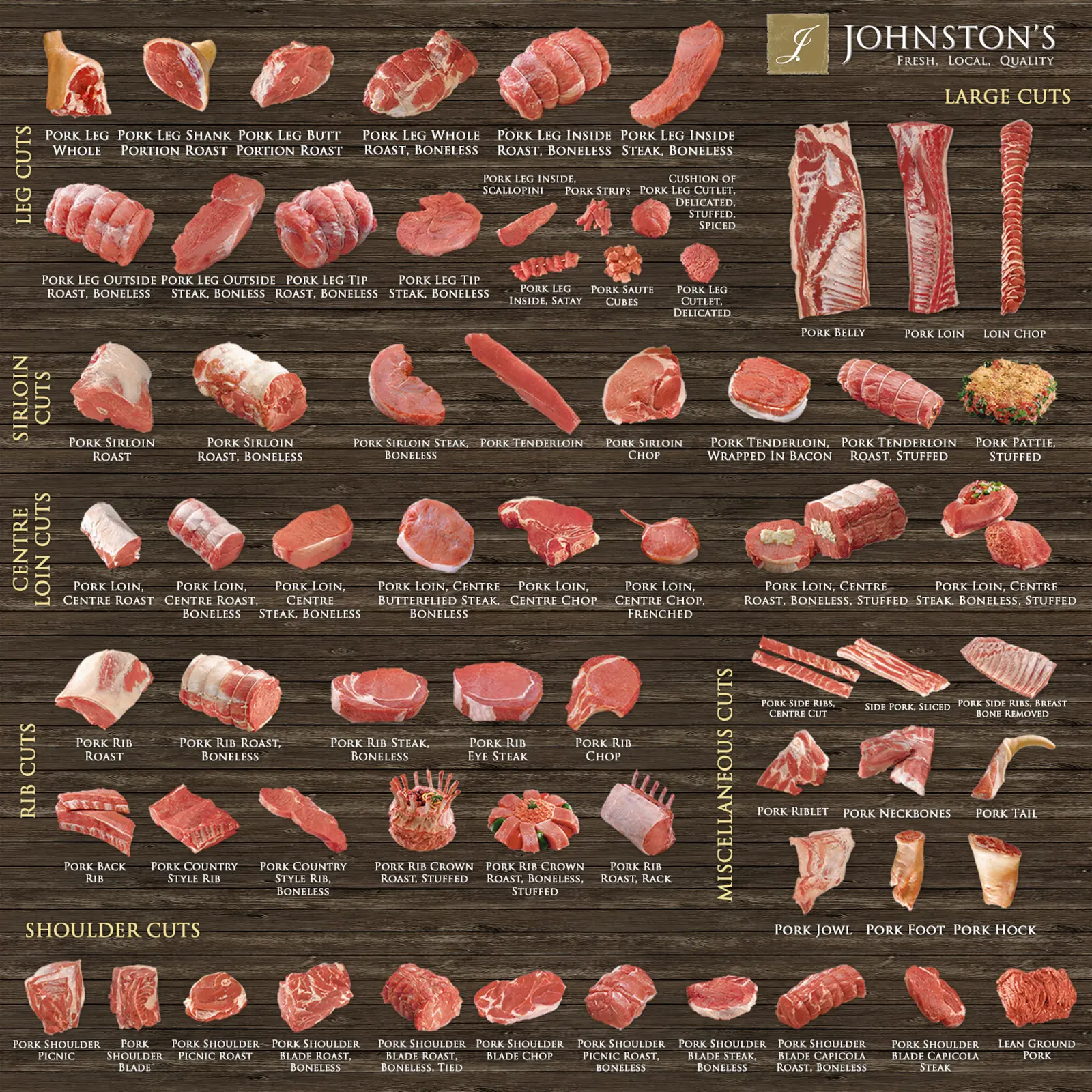
Pork Cut Chart
Looking for some mealtime inspiration? Use the cut chart below at your local butcher to request a custom cut!
Pork Handling Instructions
Pork is a great source of protein and a great way to maintain a healthy balanced diet. Here are some tips for storing and handling your pork.
Shopping for Pork
- When grocery shopping, always shop for non-perishables first and buy meats last.
- Inspect packaging to ensure there are no tears or leaking present. Also, be aware of temperature damage. Ex: if you are buying frozen, inspect for freezer burn.
- Always note the “Sell by” or “Use by” dates; especially, if you plan on freezing the meat for future use. The closer the product is to its expiry date, the quicker it should be put in the freezer to avoid the meat freezing bad.
Storing the Meat at Home
- Make sure to refrigerate meat within 1-2 hours at a temperature of 0°C and below.
- Cook or freeze pork within 3 to 5 days.
- Ensure wrapping is tight and meat juices are not transferring onto other foods to prevent cross contamination.
- When freezing product, be sure wrap in plastic wrap or/and foil that is recommended for the freezer.
Preparation
- Always wash hands in warm water and soap before handling.
- Do not cross contaminate with other meat and poultry; prepare separately!
- Ensure cooking/preparation surfaces and utensils are clean. After preparation, wash utensils and surface down with water and an unscented cleanser or liquid chlorine bleach diluted in a gallon of water.
- Keep two or more cutting boards on hand and make sure one of them is reserved specifically for chopping raw meat, poultry and seafood.
- Using non-porous cutting boards for handling meat is recommended.